So What Do You Do, Anchal?
Across conversations at the dinner table, making new friends, job interviews, my SOP to Stanford, and networking events, I have told versions of my story in sequence, so listeners believe my life was a set of strategic decisions. While partly true, my life and why I work in education stem from questions I kept asking myself as I progressed through undergraduate study, picked my first paid gig, moved overseas to study Learning, Design, and Technology, and now work full-time at an edtech non-profit with a mission to ensure that every student from every school has an opportunity to learn about AI and CS. I continue to ask, “What do I want to do?” and “What is my purpose?” While I succeed and fail at answering “So what do you do, Anchal?” most days, I wish I had a straightforward answer like “I am a software engineer” so we could move on and I could avoid the discomfort of having to question every life decision and of others not understanding what I do. I am beginning to accept that whatever I have done cannot be covered by a single playbook, and that I was never meant to be restricted to a single job title. I am like a butterfly, flying from flower to flower, choosing to linger or pass by briefly, following my curiosity.
Before I begin, I want to preface by saying that this blog is yet another version of my story, and I might not be able to capture it in its entirety, but it will be the most comprehensive version so far. So, how should I structure it? Maybe as a set of questions I asked every time I took a turn and started walking in a different direction? Or as a sequence of inflection points?
So here goes
The construction site
In 2017, during my second year of studying Lifestyle Accessory Design at the National Institute of Fashion Technology in India, I first set foot on my parents’ construction site for our new house. This was an intense project, building the house from scratch and starting their construction business. I was preparing to become an interior designer, so having a construction site as a blank canvas was a blessing. Guided by my parents' interior designer, who trained me and encouraged me to make site visits to apply what I was learning at school, I also enrolled in a 2-D AutoCAD course to stay ahead. For a geometry assignment, I brought real furniture to the site, drew plans for possible arrangements, and photographed the setup. On the third visit, a child crawled into my frame while I was photographing.
My first question was: What is the child doing here? Then: Where should the child be, and why are they playing with construction debris? This began a series of questions that have led me to where I am today.
Questioning the purpose of my design education
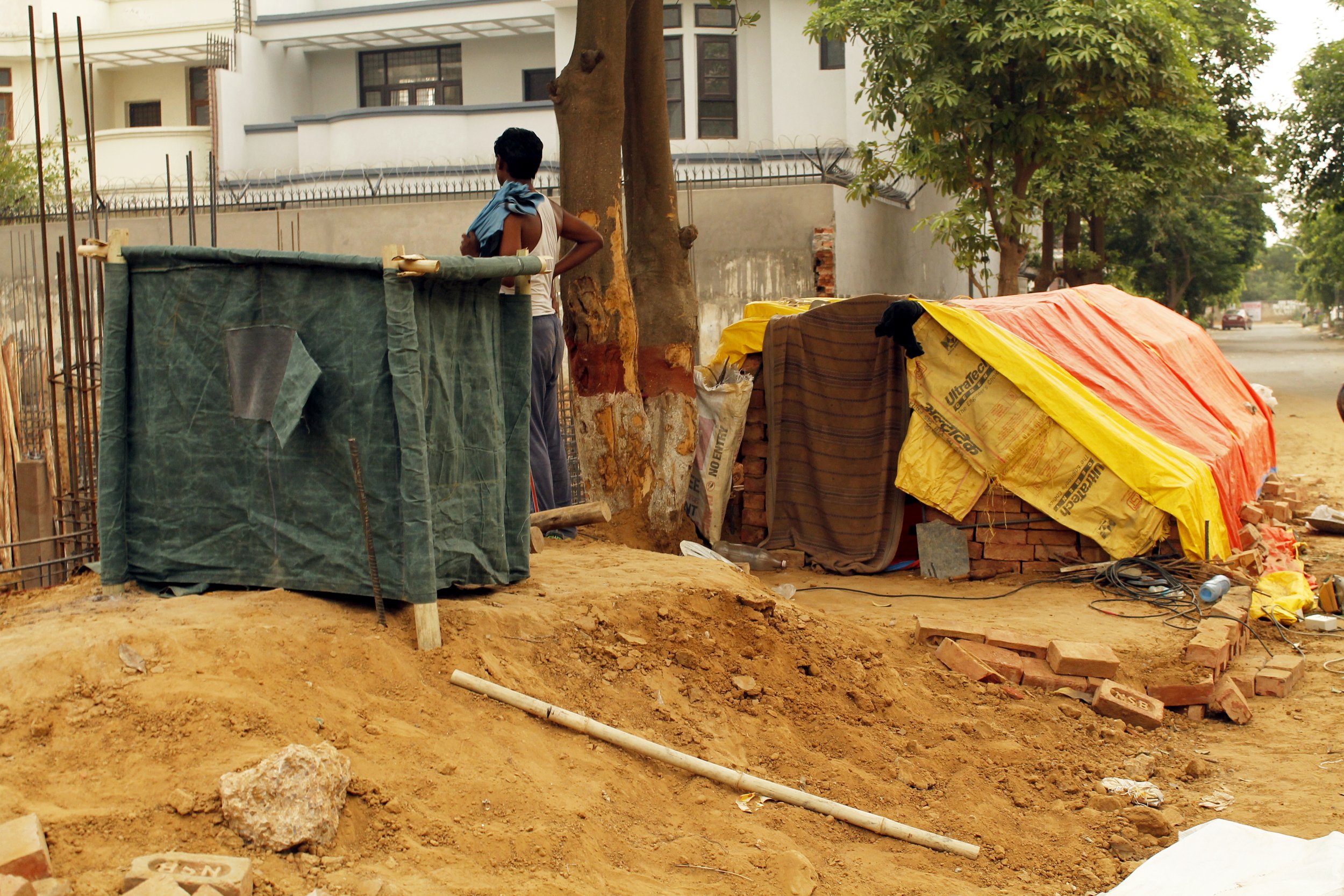
My parent’s construction site where I started installing scale models of temporary housing structures
As I read about construction workers’ lives in New Delhi, the issue of homelessness became clear. These workers have informal contracts and move constantly from site to site after migrating from states like Bihar and Uttar Pradesh to find work in the National Capital Region. Realizing the city is built on their shoulders and their housing is precarious, forcing constant moves to maintain income, unsettled me. It was hard to accept that many of these people lived on my parents’ project site and that their children lacked safe spaces, such as creches, or meaningful learning opportunities. I questioned the purpose of my design education and who would receive the fancy products I was trained to design: products that would generate profit and serve only the rich.
I questioned the purpose of my design education: Who do I want to serve?
Asking this question was just the start. I realized I wanted to reject my design education as it was and find ways to apply it to solve problems. Naive but driven, I discovered Swati Janu’s project, “Missing Basti,” which focused on building shelters for the homeless using low-cost materials. I messaged her on Facebook, expressed my interest, and left my contact number. I did not expect a response, but Swati called and invited me to meet her at the School of Planning and Architecture in Delhi. There, I met professors working on prototyping humane, temporary housing for construction workers, running a project titled “Transient Affordable Sustainable Constructions Systems” or TASCS. It was the perfect opportunity to be part of a solution, though it soon opened new questions and uncomfortable societal truths.
Being at the construction site full-time with a twist
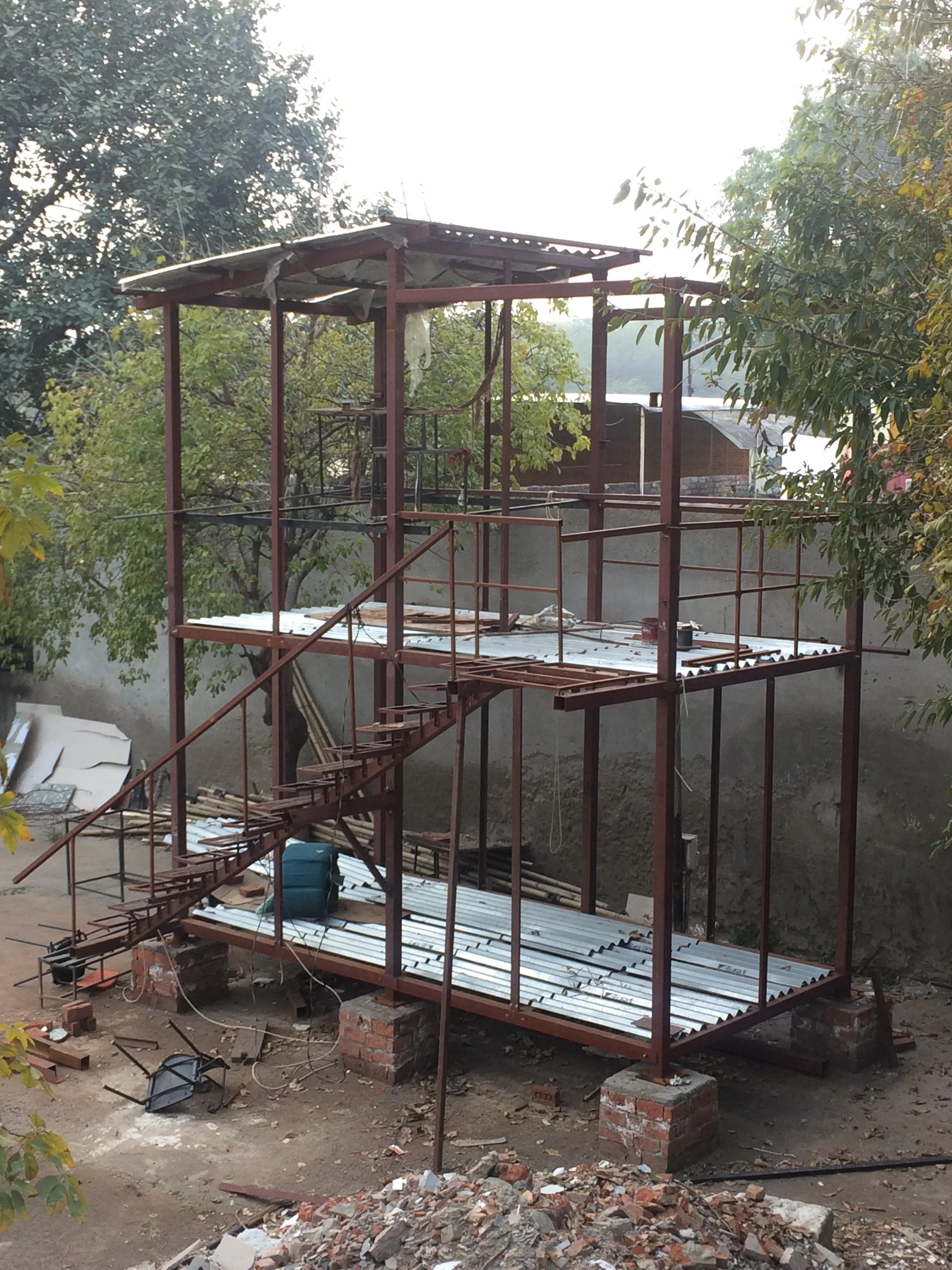
A 1:1 prototype of a temporary construction worker housing structure at SPA, Delhi
I was at the construction site again. In a campus backyard, a small team of researchers and architects prototyped a full-scale temporary housing model that could be dismantled and shipped from site to site. The goal was to standardize quality housing for construction workers, ensuring light, ventilation, sanitation, and space for their children to learn. I wasn’t trained as an architect, but the team supported my growth and answered my questions. To assess learning conditions, we visited construction sites across New Delhi. I sketched what I observed, labeling how workers created their housing. Conversations with site workers and activists revealed that construction workers have access to state social services but often cannot use them because they lack identity cards. Many skip this step, either because they are uninformed or because they think they will move soon, so why bother? This benefits site managers with budgets for worker housing and services such as creches. They buy the cheapest materials and have workers build temporary shanties, which they sell once the project ends, since metal never goes to waste. I felt confused and helpless, unsure of my role because the biggest missing piece was worker agency and gaps in policy implementation. Who am I to dictate how they should live when they had no say in state-engineered problems?
During visits, I saw more children lacking access to quality education and witnessed the gap between well-written policies and poor execution. I questioned my privilege. Who am I to tell people how to live? And to claim that what we’re building is the best solution?
A slight but important detour: Learning = the Joy kids experience as they make new discoveries.
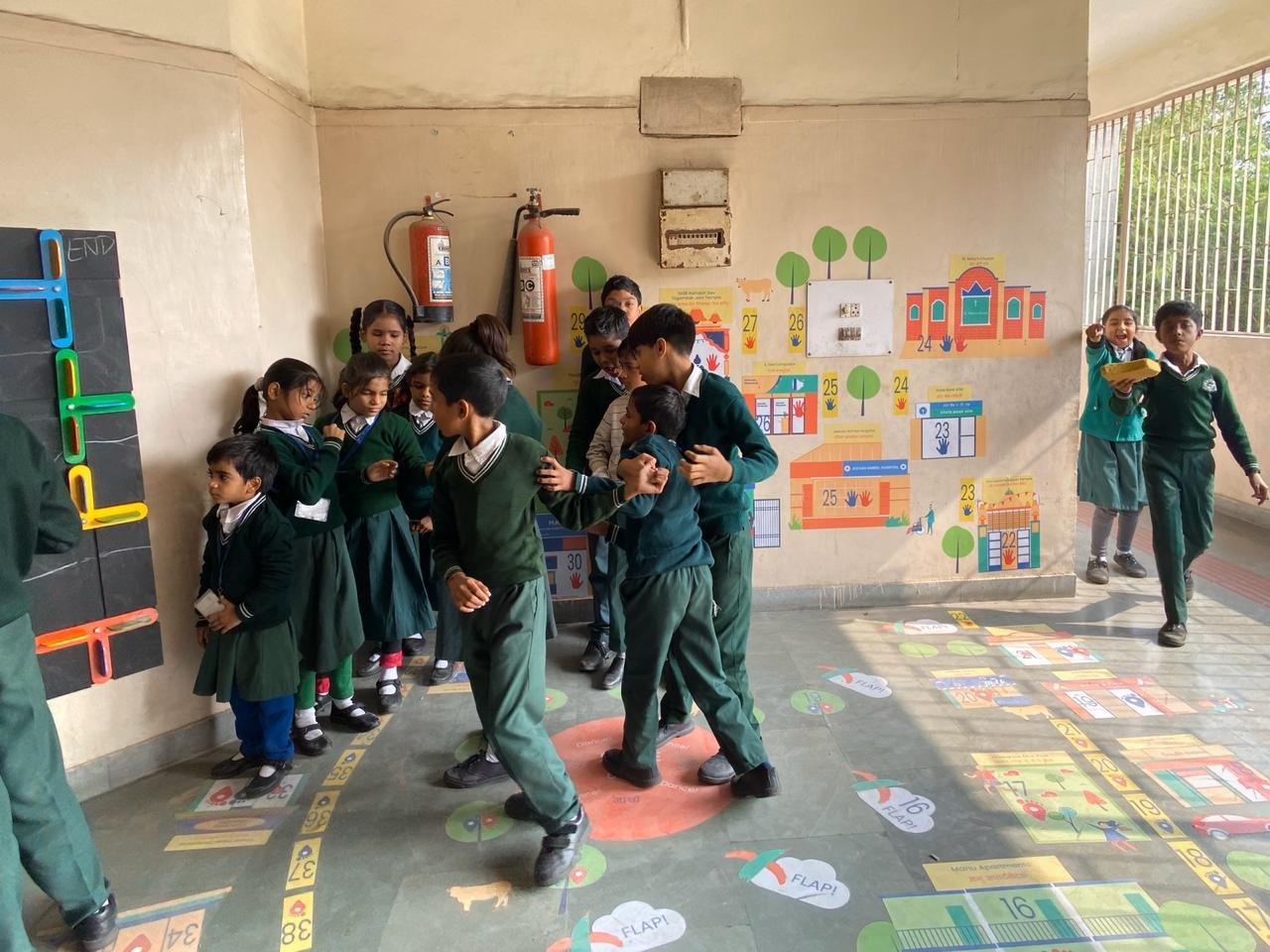
A corridor in a school building I redesigned with play elements in New Delhi
While asking these questions, a project lead at TASCS invited me to join another project, believing I could contribute. I traveled to an apartment in Delhi to meet a multidisciplinary team of educators, architects, and designers redesigning desolate public school spaces into play areas for children. The project aimed to bring the curriculum alive in physical spaces, allowing children to learn through play and reflection. I led the design of three installations and discovered my love for kids. I enjoyed watching them laugh and jump in the play spaces we created. We scaled our work to 50 schools, a huge undertaking. This experience stood in sharp contrast to what I saw on construction sites: children playing with debris instead of enjoying learning and friendship. As the project ended, I prepared to enter the workforce and asked a simple question: How do I continue building joyful learning spaces for children?
Finding a stable job in social impact and continuing to question my role as a designer.
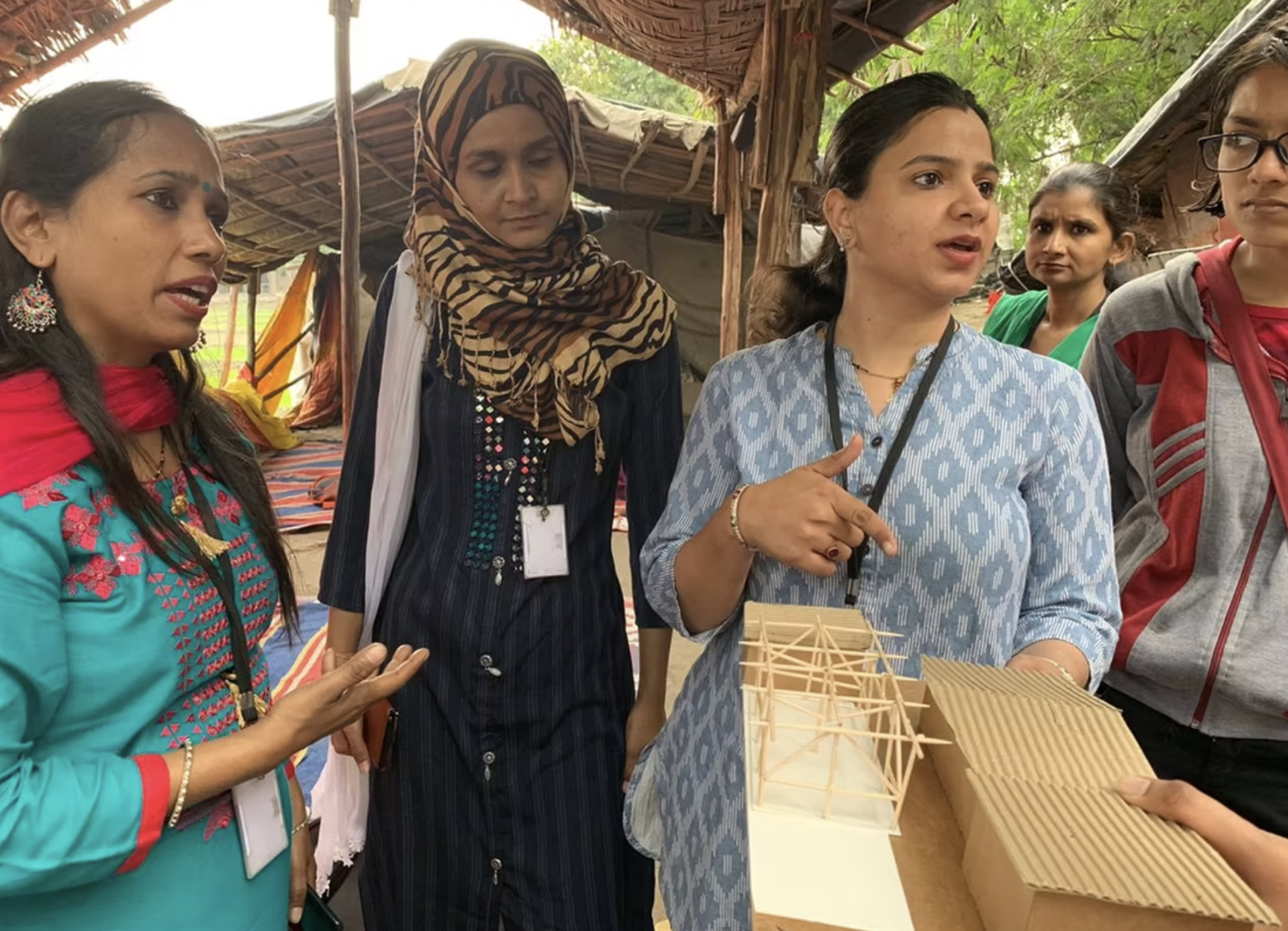
Presenting a scale model of a community learning space to teachers at an Anganwadi (day-care center) in Delhi, India
I couldn’t find similar work. Swati Janu, who was also my colleague at SPA, was setting up a community-driven architectural practice in Delhi to help people access government services, such as affordable housing and education. She called it Social Design Collaborative (SDC). It seemed a good fit, since I could continue in social impact. At SDC, I visited sites where Swati built community centers and explored affordable housing and learning spaces for children and youth with a small team of architects and designers. As a designer, I documented sites and helped build the brand to attract funders, talent, and impactful projects. My role went beyond this; I built models, interviewed children and community members, and shared insights with the team to inform design. I worked on projects serving street vendors, home-based workers, aanganwadi workers, youth, and children. A major project was to build an interactive city-planning toolkit to gather recommendations from low-income neighborhoods on Delhi’s Master Plan 2041, which guides city services such as transport, housing, and utilities. I won’t detail the project here, but I have a case study available. A key issue motivating this work was that, although the Delhi Development Authority puts the draft plan out for public review, an IGSS survey found that 80% of Delhi residents don’t know what the Master Plan is or what its purpose is. This was worsened by poor access to information in low-income areas. I faced the question again: “What can I do when the state creates conditions preventing people from exercising their rights?” What in my life allows me agency, identity, and a voice against wrongdoings? The answer was access to high-quality education. While education can’t solve all societal problems, it can solve many.
The school is a construction site of a different kind.
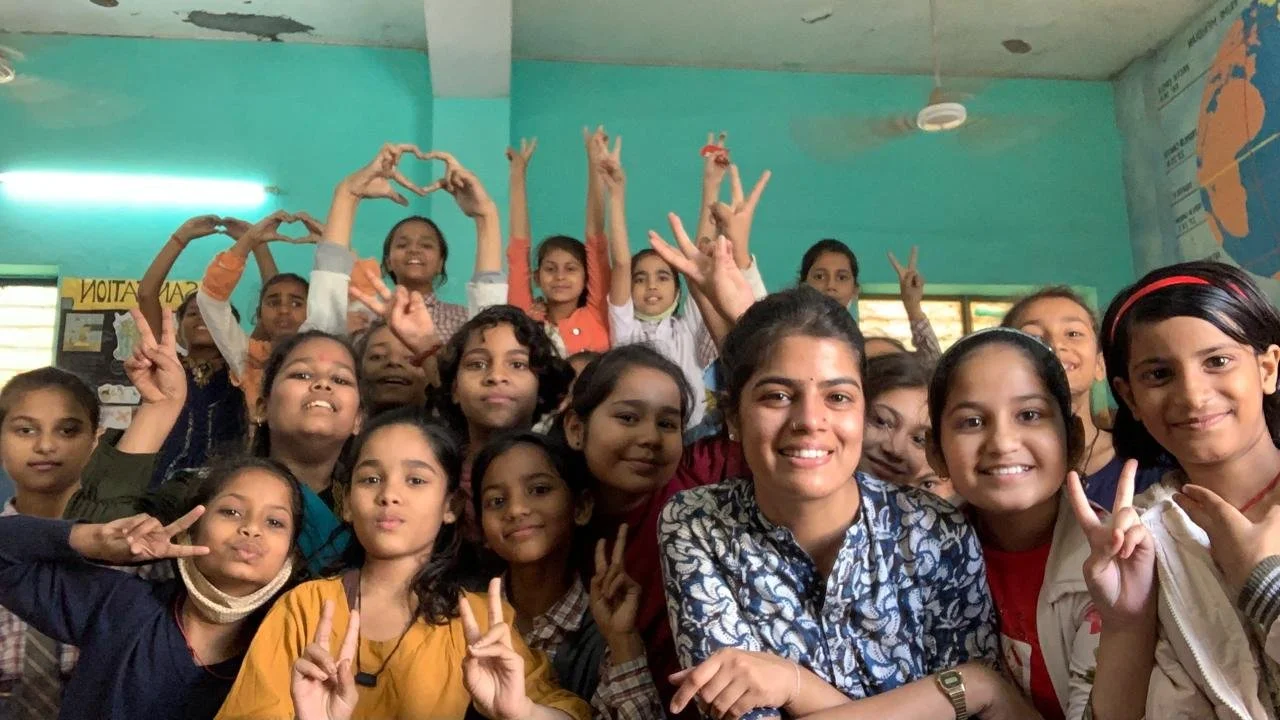
This was my classroom in a low-income public school in New Delhi
I quit my job, a difficult decision, to become a full-time teacher by joining the Teach For India fellowship. The pay was low, but I was grateful for my parents’ support. I realized that to work in education, I had to understand it as a system, and becoming a teacher was the best way. This was in 2021, during the COVID-19 pandemic. I first met my students through a computer screen or phone calls. As fellows, we had budgets to provide internet recharges and basic rations. For students without dedicated phones, we provided tablets for online classes. The first year was fully online, which was not what I had envisioned; I had prepared to teach in a real classroom and engage more meaningfully. Instead, I had to onboard students and parents on platforms like Zoom, often their first time using them, so they could access learning. We did our best to stay connected through tiny screens. This situation pushed me to experiment with digital learning tools to make lessons more interesting because, honestly, who enjoys learning on a small phone screen? For someone previously averse to technology, I was surprised by how much I enjoyed “product-testing” these tools before sharing them with my students.
Finally, in-person instruction and some unpleasant surprises
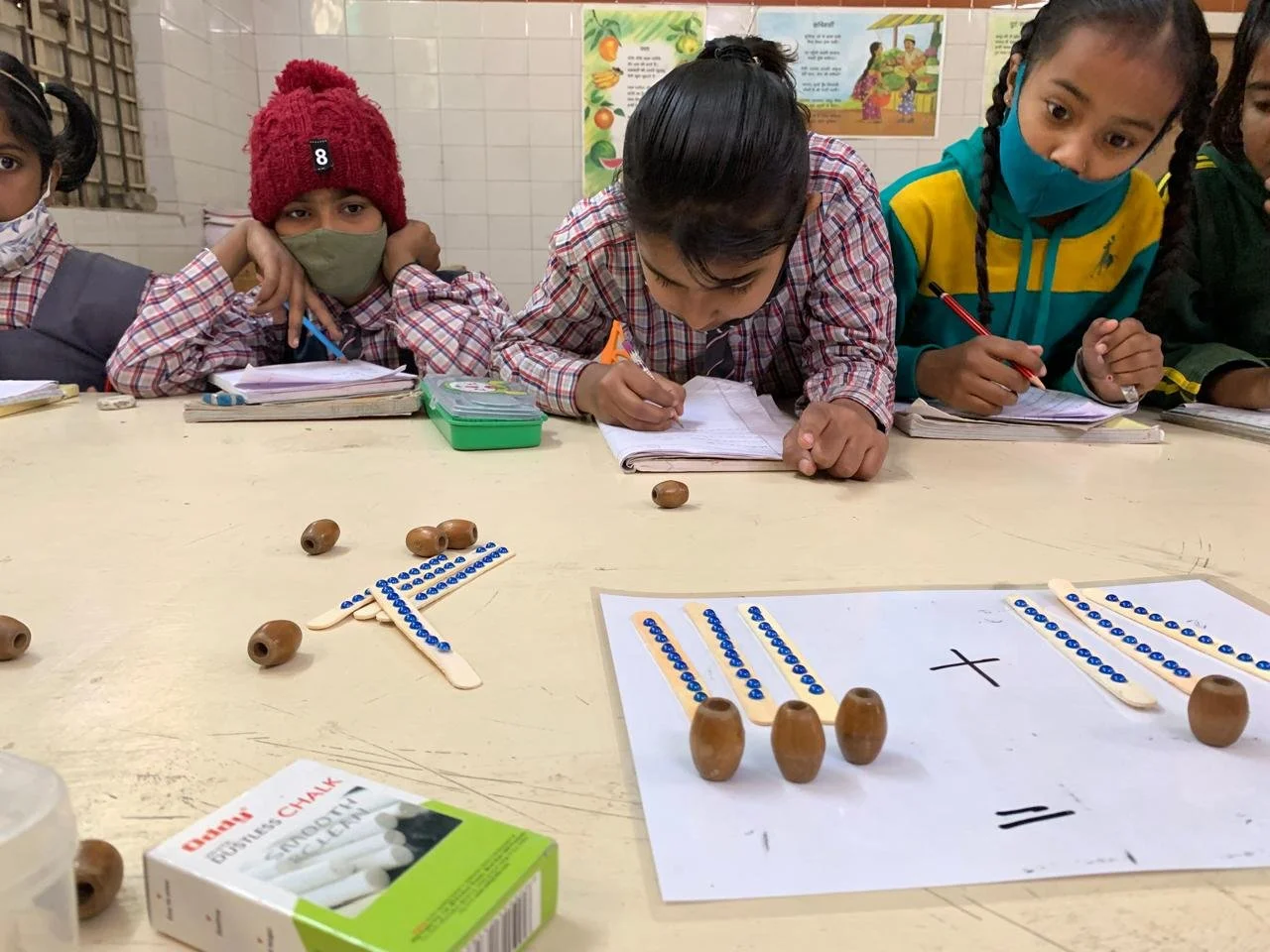
I started teaching students in small groups who needed more support in basic number sense due to learning loss brought on by the pandemic
About six months into the pandemic, when it seemed under control, announcements were made that schools would reopen for in-person instruction. I was excited and kept thinking about what to do with students on the first day. We weren’t going to have lessons; I could hardly contain my excitement. On day one, I finally saw my students in person and see how tall they were in real life. We attended school on and off as COVID or pollution in New Delhi worsened. I learned that schools shut for two weeks every year due to rising pollution, and children’s learning always suffers. I conducted assessments and was shocked. Most students had lost at least one essential reading or writing skill, and 90% read below grade level. I partly blamed the limited in-person instruction. I focused all my energy on helping students read, making this my north star because reading and comprehension are essential to accessing knowledge, including understanding math problems. I set up a classroom library to provide constant access to authentic texts. We did daily reading instruction, including a routine of reading for the first 15 minutes each day. I carried a book to model the habit. I had students dress as characters from stories to deepen comprehension. Our class was full of words students could use while writing. Writing is hard!
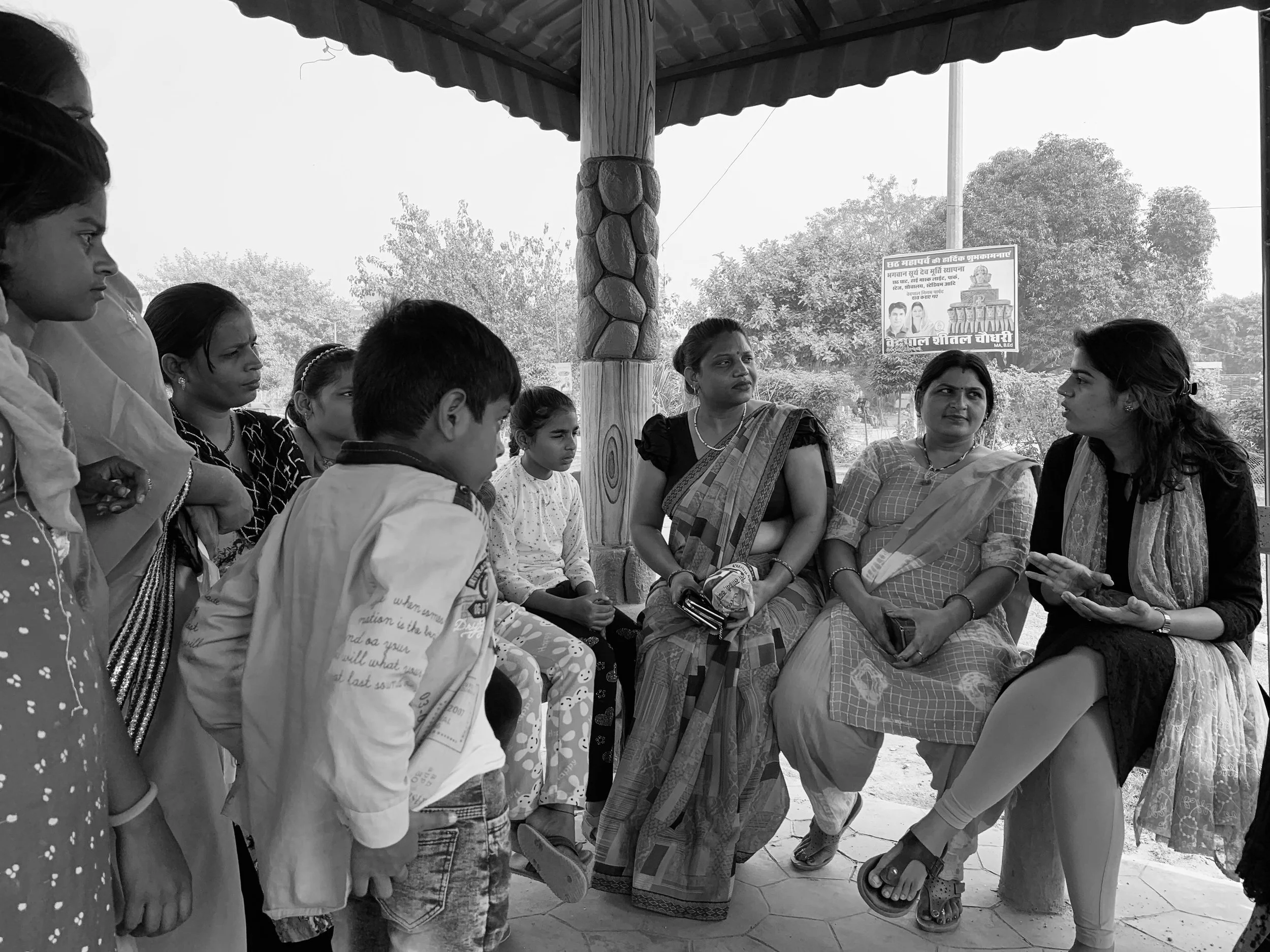
A learning circle with my students’ mothers to train them on literacy-building practices
In my second year of teaching, I began thinking about how to sustain long-term impact. How could I ensure students retained reading comprehension after I left? I had no control over their next teacher. Then I realized students spent most of their time at home, and parents could sustain these practices as their “first educators.” I started visiting students’ homes to meet parents and understand their participation in learning and how to improve it. I learned that 80% of mothers wanted meaningful involvement but felt unable to do so due to their own literacy limitations. I began considering creative, low-effort ways to involve mothers at home. For example, teaching halves and quarters while cooking a favorite dish or building reading habits and a literacy-friendly home environment. At the time, Google piloted the Read Along App, helping children read at their level with pronunciation and comprehension support. I started convening mothers on weekends or after school, in parks, on roofs, and at school, to help them use edtech apps to build reading routines. What bothered me was how many stories and characters lacked relevance to my children’s daily lives. I began wondering: Who builds this technology? How is it built? And how can it be designed to adapt to children’s routines and interests?
Making the move
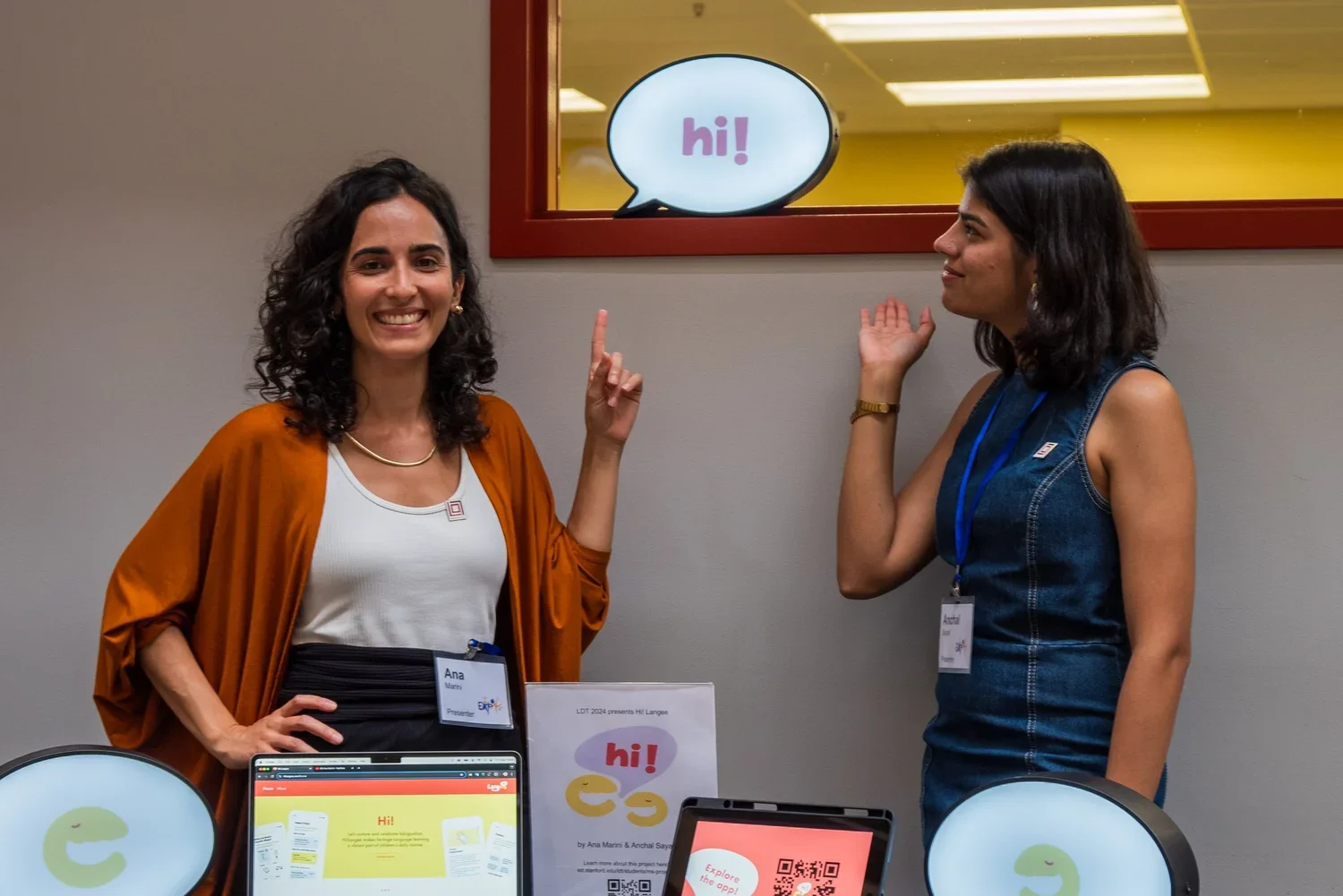
Ana Marini and I presenting Hi! Langee at our final master's project exhibition at Stanford University.
These questions inspired me to study further, focusing on how technology is designed for education. Researching programs, I discovered Stanford’s Learning, Design, and Technology program, which prepares students to identify learning challenges and address them with technological solutions. I explored research in my problem space, discovered solutions that encourage parent participation, and wanted to build similar solutions for parents with low literacy. I knew I wouldn’t “solve” the problem in a brief program but was excited to explore creatively. I joined forces with Ana Marini, also interested in designing family learning experiences. In our second quarter, we interviewed parents with young children on campus to understand their role in English literacy development and found a different problem. Immigrant parents in the US struggle to retain their native languages at home as children are increasingly exposed to English through school and media. Further research, interviews, and discussions with Stanford bilingualism professors confirmed this was a widespread issue. By the third quarter, Ana and I explored approaches, initially planning structured language lessons, until we met Guadalupe Vardes, an expert in bilingual family development. Over coffee, she explained that young children acquire language not through words but through daily conversations with caring adults. This shifted our project’s direction to encouraging parents to speak their native language to children, especially when English dominates. Interviews confirmed this was a major pain point: parents forget to speak their native languages during busy moments, like getting dressed, when English feels easier. Without going into detail (covered in my case study), we settled on sending daily conversational prompts rooted in children’s interests and routines, turning mundane tasks like driving to school into opportunities for native-language exchanges. To scale prompts, we explored Generative AI applications. While building our prototype app, we connected it to ChatGPT so parents could regenerate prompts if the list didn’t fit. This happened amid growing use of GenAI in education. Naturally, I grew curious about how the technology works. Stanford was setting up an AI Tinkery lab to help educators apply generative AI in educational design. Anyone could join learning experiences aimed at lowering AI entry barriers. Ana and I visited the Tinkery to meet Jessica Ann, the manager, to ask how to control ChatGPT’s behavior with better prompts, since regenerations sometimes broke or became wordy or nonsensical. She introduced prompting techniques, and I was fascinated by the technology’s potential. She also told us we were the first to ask questions on the Tinkery’s opening day. She invited me to join as a mentor. I was confused, knowing nothing about AI, but she encouraged me, saying no one did. During my time there, I asked, “What if more educators like me could apply AI in education?” I considered my pain points, like differentiation and content generation, that AI could ease. That’s when I discovered the term “AI Literacy.”
Ending up at CodeAI: What I do now
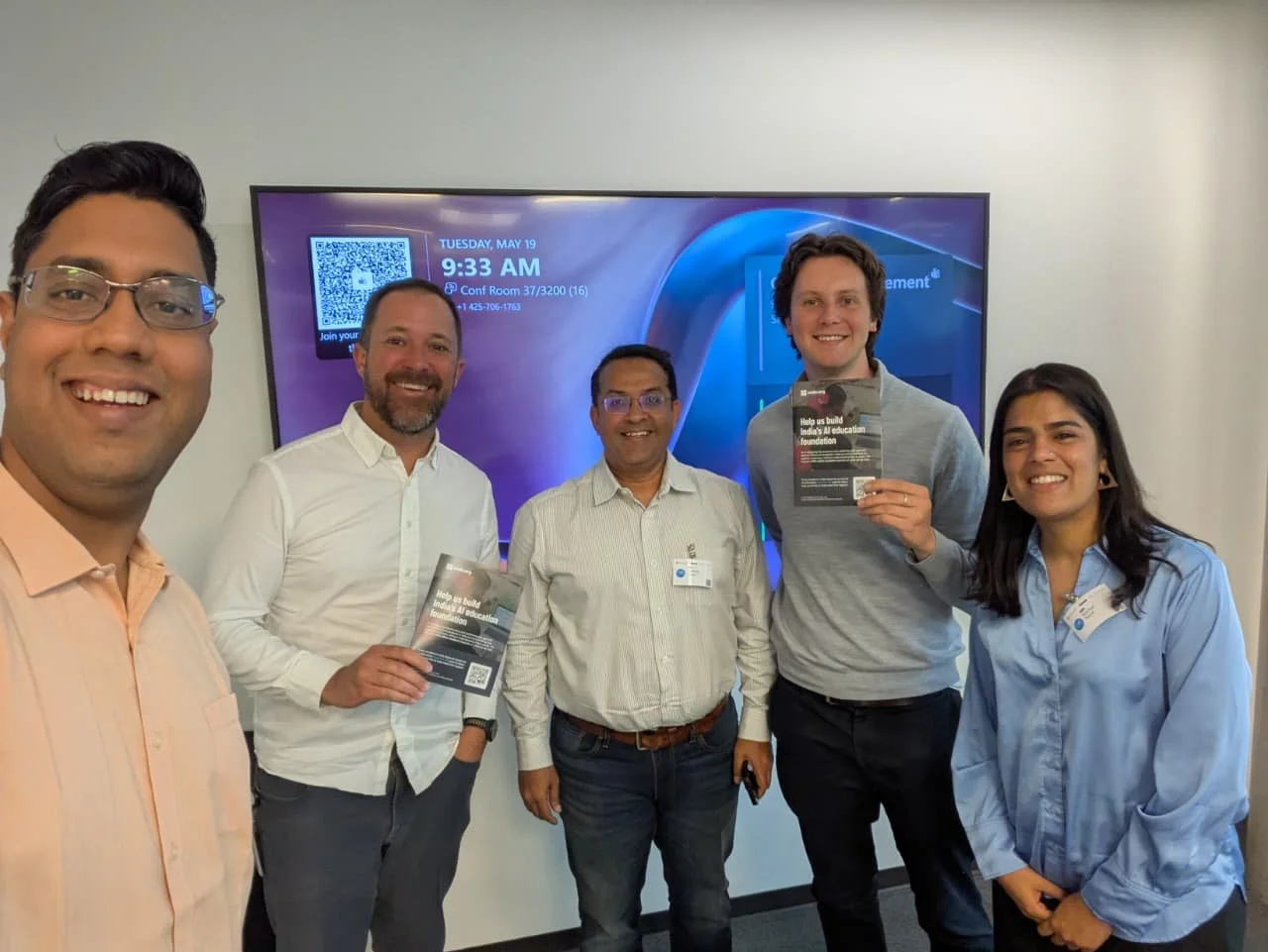
Saleem, Sai, and I at Microsoft’s HQ to present CodeAI’s work in India
I work at CodeAI, an AI and computer science education non-profit, as the Senior Global Partnerships & Business Development Manager - it's the closest a job title has ever come to capturing the myriad of experiences I've accumulated across half a decade. But what matters most to me in that title isn't the seniority or the scope. It's the word partnerships. If there is one thing that has always enabled me to succeed, it is relationships with teams, managers, students, their parents, colleagues at universities, and now a cohort of partners across 12 countries who are expanding access to AI and CS education in their communities through CodeAI’s curriculum. The biggest part of that portfolio right now is India, and this moment is close to my heart for reasons that go beyond the professional. I think about my students from that government school classroom in New Delhi every single day, and I wonder what it would have meant for them to have access to the kind of education we're now trying to build at scale. India represents the single most significant opportunity for AI education to reach the most underrepresented: 250 million students in the education system, a government mandate making AI compulsory from Grade 3, and a narrow window to get it right. I work closely with our local team in India, led by Saleem Khan, helping them unlock the innovation capital and technical expertise they need to move fast. I spend a lot of my time in rooms with philanthropists, technology leaders, and executives — opening doors, making the case, and building the relationships that translate into real resources for real classrooms. And India is just the beginning. I feel equally excited about doing the same for our partners across Latin America, APAC, and EMEA, because the question I keep asking myself is the same one that started all of this: how do we make sure the most powerful technologies of our time reach the people who need them most?