I Built a Tool to Tell Me I Bombed a Donor Call. Send Name Suggestions.
Backstory
My role has become very external-facing. Which I am very happy about, to be honest. I get to talk to people for a living: funders, policymakers, believers, advocates, and partners to expand the reach and benefits of meaningful AI education around the globe. If you've read some of my previous pieces, then you'd know I work as a Global Partnerships Manager at CodeAI. Skip to the concluding paragraph of this blog post if you're curious.
The last couple of months have been heavy on sifting through complex policy documents and keeping pace with policy developments in AI education, specifically in India, where CodeAI has expanded next, following an incredibly impressive track record of reaching 150M students through their Computer Science and AI Education programs. CodeAI is supporting a team of 4 in India to help them set up their operations over the next three years and develop a market-ready product that reflects the classroom realities of students and teachers in India. With new beginnings, there is a need for fresh capital: access to funding and networks to stand something up on its feet. I have a bad habit of getting carried away when telling stories, but this was necessary context for you to know why I built a Donor Call Feedback System.
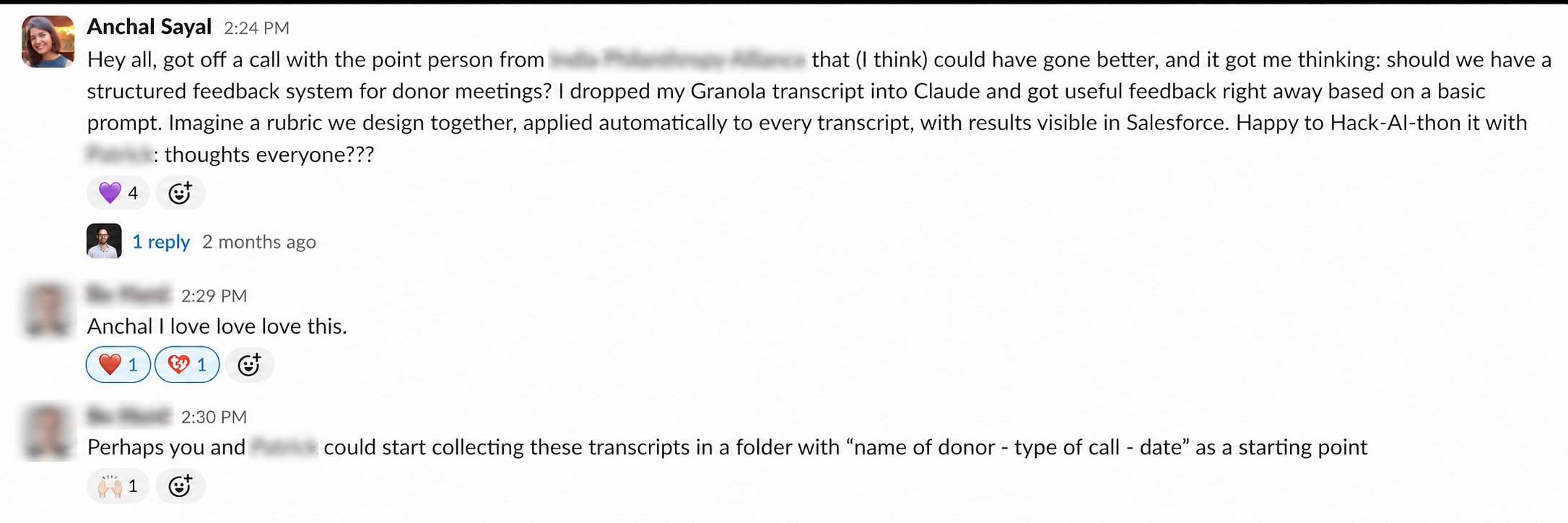
Well, I am a storyteller through and through, so my role in helping raise this innovation capital was to create a narrative that explains the structural challenges in India, how CodeAI needs to adapt its learning platform, the policy developments that are the wind beneath our wings, and the innovation capital required to enable these efforts. As someone who has taught in a classroom in India — the kind of classroom we're trying to adapt our product for — I was very excited to tell this story myself to funders. After a couple of scattered calls, one call left an impression on me. More on the self-critical side. You are your worst critic, surely, but I knew it didn't go well, and I needed feedback. For some more context, we're a non-profit and, by definition, always stretched thin, and therefore not always able to support each other even with the best intentions. I needed feedback, and needed it on an immediate basis while the learnings were still fresh.
So I reached out to my team with this Slack message:
I did it with AI and our star CRM admin.
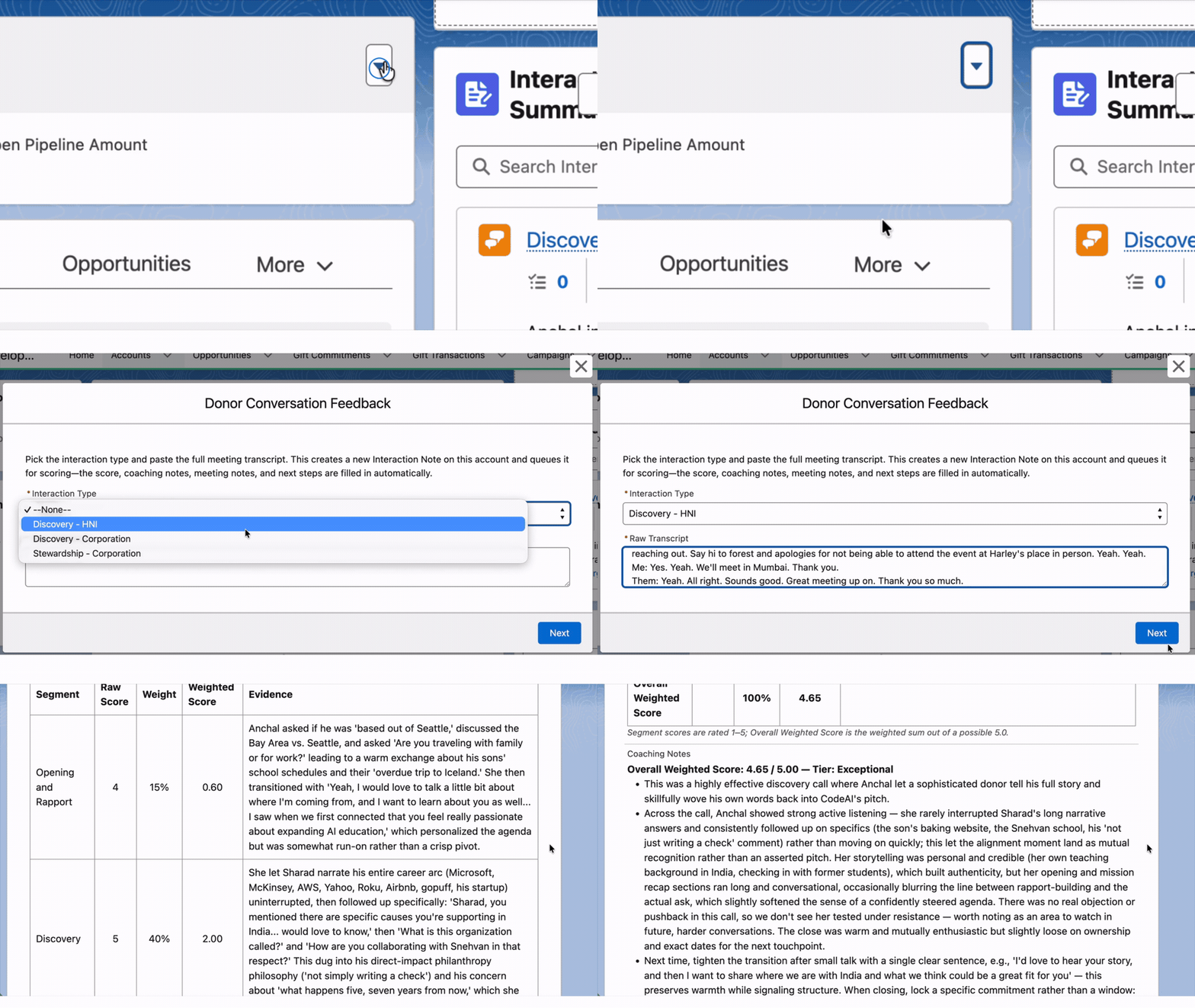
To get us started, I drafted a quick spec doc and had a chat with my teammate to refine what the features of this system should be, and of course everything has to work inside Salesforce, our CRM tool.
What Does the Tool Actually Do?
At its core, this thing does two jobs: it tells you how the call went, and it tells you what to do about it.
Job 1: It scores the call, and then it coaches you like a (very patient) mentor would.
You upload the transcript, and it hands back a weighted score based on how the discovery call actually unfolded — not a vibe check, an actual breakdown by segment. But the score was never really the point. The real value is in the three coaching notes that come with it: the one specific thing to change next time, the single moment in the call that mattered most, and an honest read on whether your pitch actually landed for this person or just sounded like the pitch you give everyone.
Job 2: It writes your notes for you. Yes, really.
If you've ever finished a call and thought "I'll write this up later" and then never did — this is for you. Drop in the transcript, and it auto-populates the interaction summary: three bullets on what actually happened, next steps (with dates and owners, if they were actually said out loud), and the boring-but-necessary metadata like who was on the call and what kind of interaction it even was. No more typing "great call, will follow up" into Salesforce at 11pm and calling it documentation.
Next: The Collective Intelligence Layer
Before I could ask "what should the rubric look like," I had to answer a harder one: whose knowledge is it actually built from? A rubric built purely from my own experience is just my opinions wearing a spreadsheet as a costume — so before a single row got built, I pulled from four sources instead of one (see sketch below). I called this the Collective Intelligence Layer, because that's really what it is. Not my rubric. Everyone's.
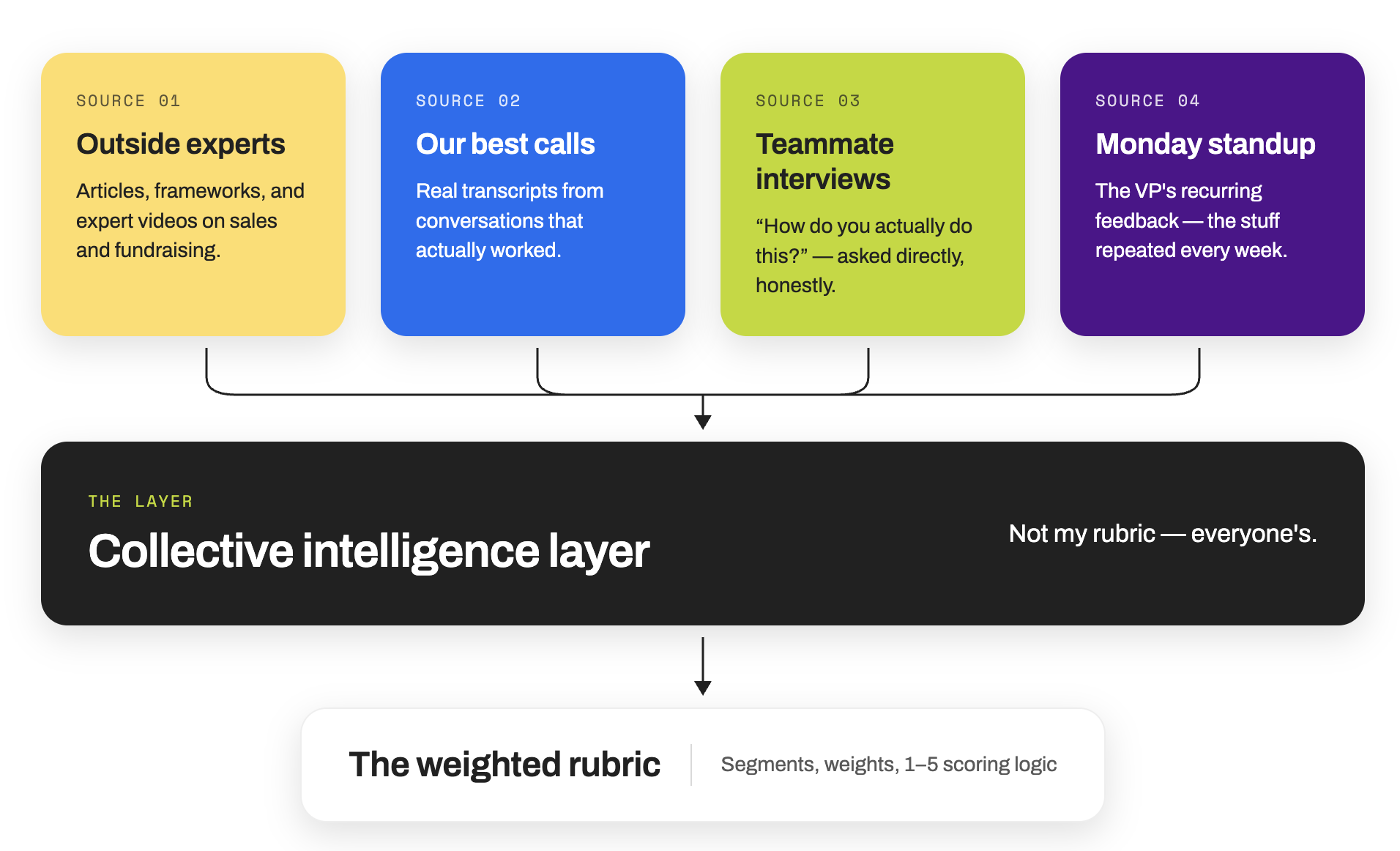
Rubric + Coaching Notes = Consumption Layer
Based on my learnings from the Collective Intelligence Layer, I designed a weighted rubric that would become the foundation. The rubric went through a ton of iterations + more feedback from teammates to stress-test whether this would help us have more effective discovery calls moving forward. Here's what we finally settled on, and I obviously tested it with the call that started everything:
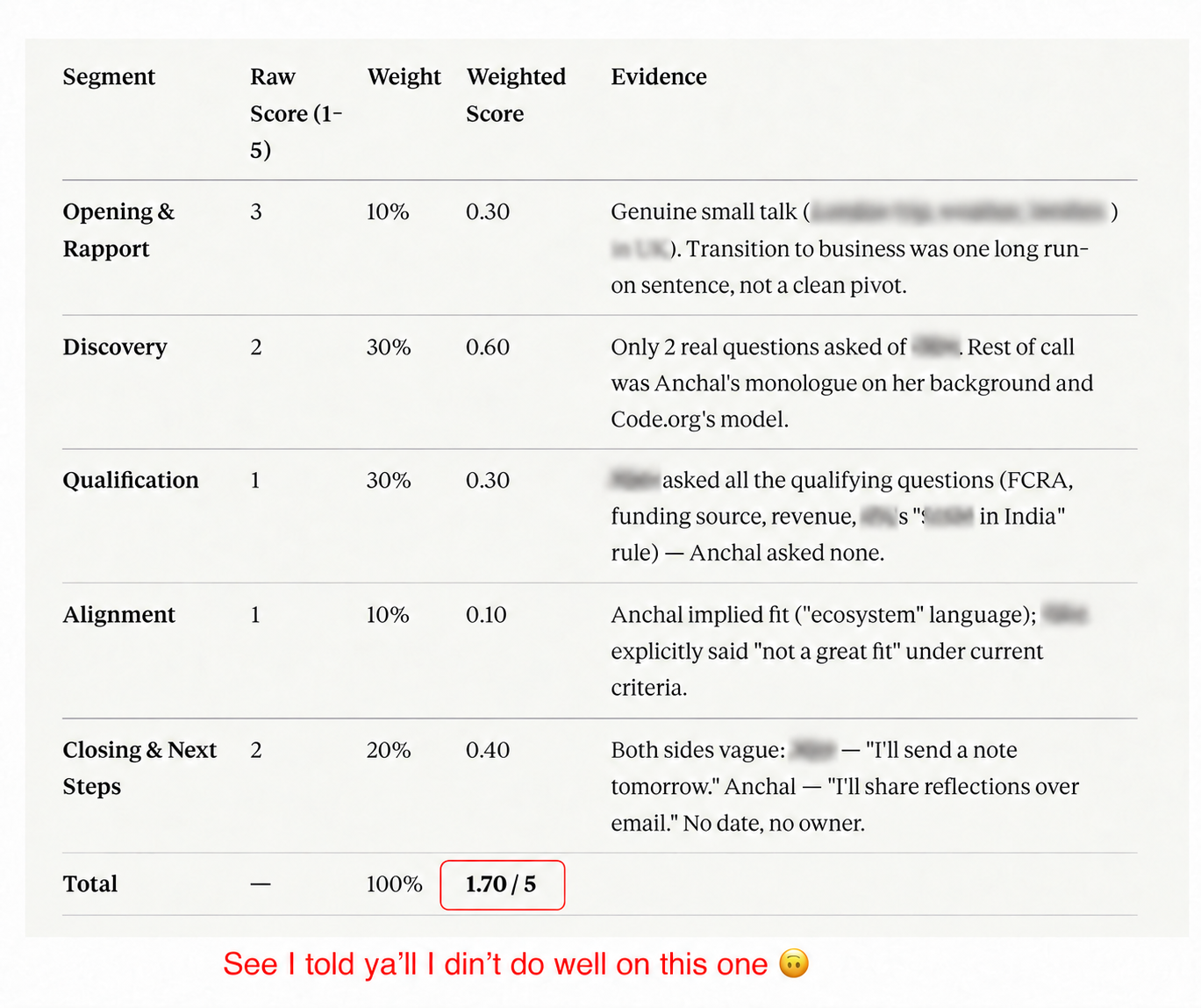
Obviously, we needed the scoring logic: what does it mean to get a 1 v/s a 4 on the qualification section of a call? Too long don’t read, just know what went behind-the-scene
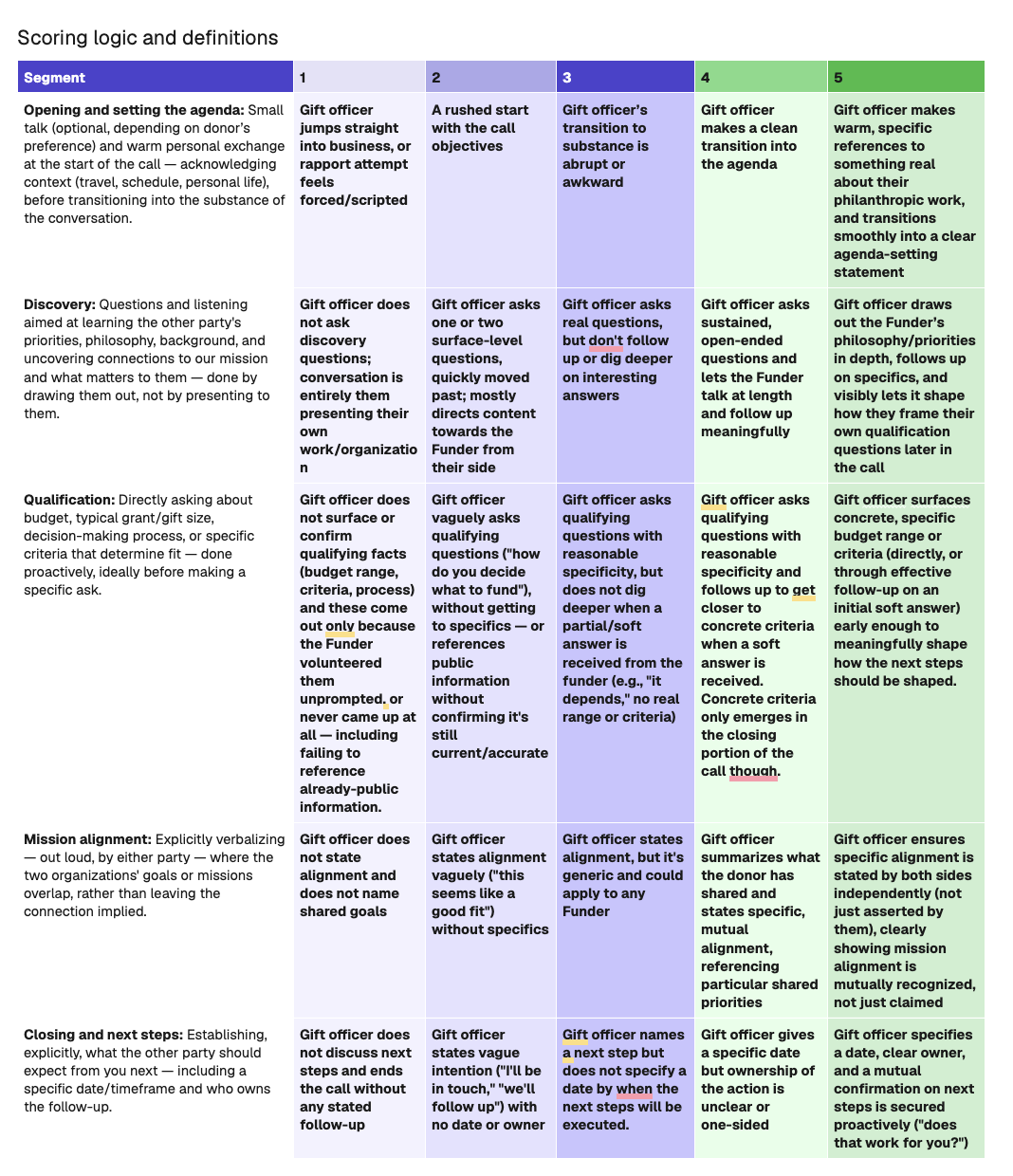
I created different versions of the rubric for discovery calls with Individuals v/s corporate partners. The key difference is that you don't ask individuals’ qualification questions — it's such a turn-off!
Coaching notes: the part that almost didn't make it in
The score was the easy part — anyone can generate a number. What I actually cared about was whether this thing could say something useful. So every coaching note had to clear three bars, or it didn't make the cut: one specific, behavior-level fix (not "be more curious," but "you spent 40% of the call explaining our org before asking a single question about theirs"), the one moment that mattered most (not everything that went wrong — the thing that actually determined how the call went), and whether the pitch was tailored or just the pitch you give everyone.
And every note had to trace back to an actual quote in the transcript. No generic template dressed up to look personal. Specific, consequential, tailored, provable — anything less was just noise wearing the shape of feedback.
How it Actually Works Under-the-Hood [In Salesforce]
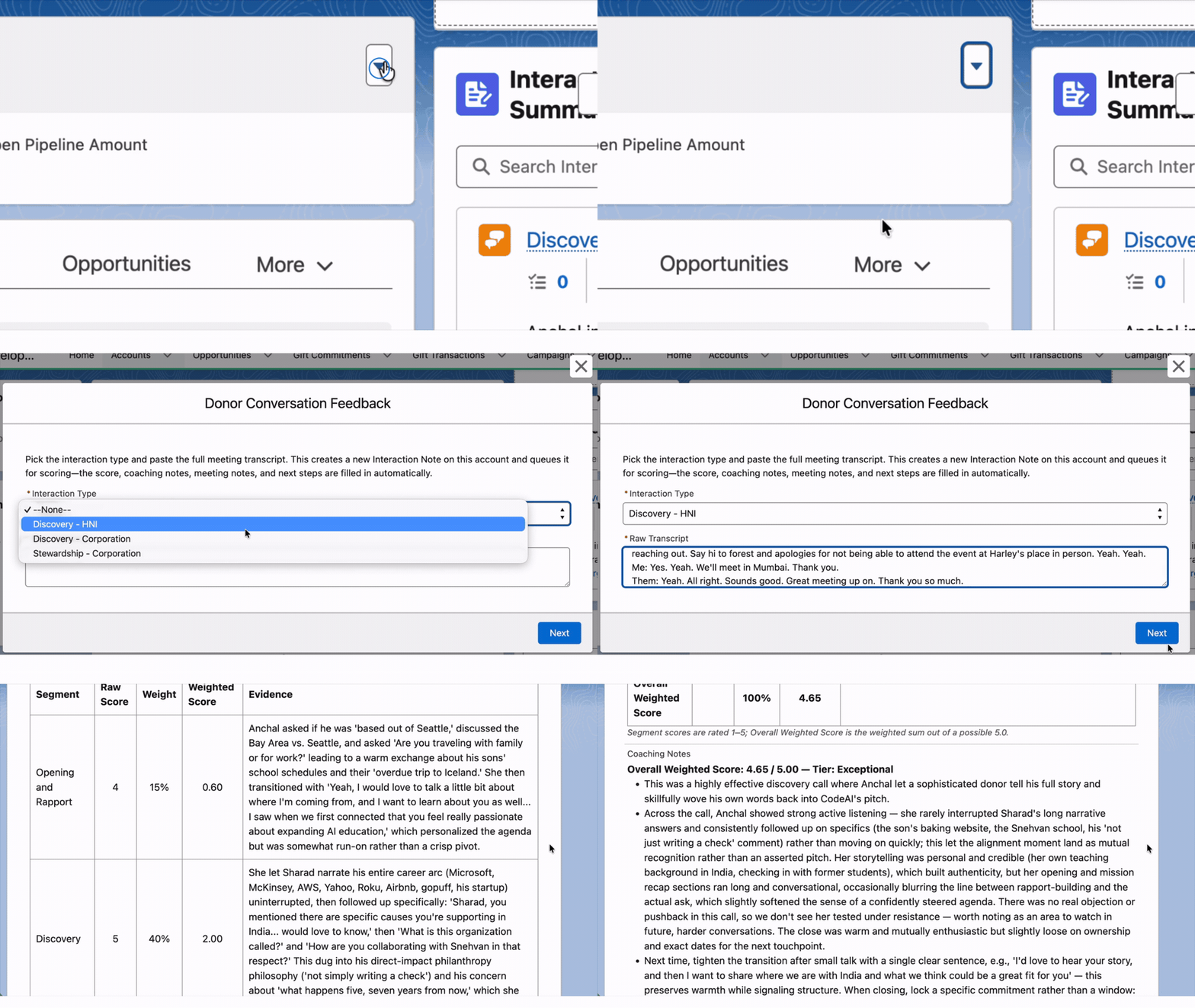
I didn't build the plumbing myself; it was a collaborative effort with my teammate. But here's the architecture, translated out of engineer-speak.
Claude Chat handled the thinking — brainstorming, spotting gaps, refining prompts. Claude Code handled the building — Salesforce fields, automations, the Apex behind the buttons. Selecting an interaction type from a dropdown fires off an Anthropic API call. Rubric scoring runs on Claude Sonnet 3.5, working only from the transcript — no internet, on purpose, so the score reflects what actually happened in the room. Each scored call costs roughly 3 to 8 cents — a pretty good trade for catching a bad first conversation with a major funder.
The numbers, for those who like numbers
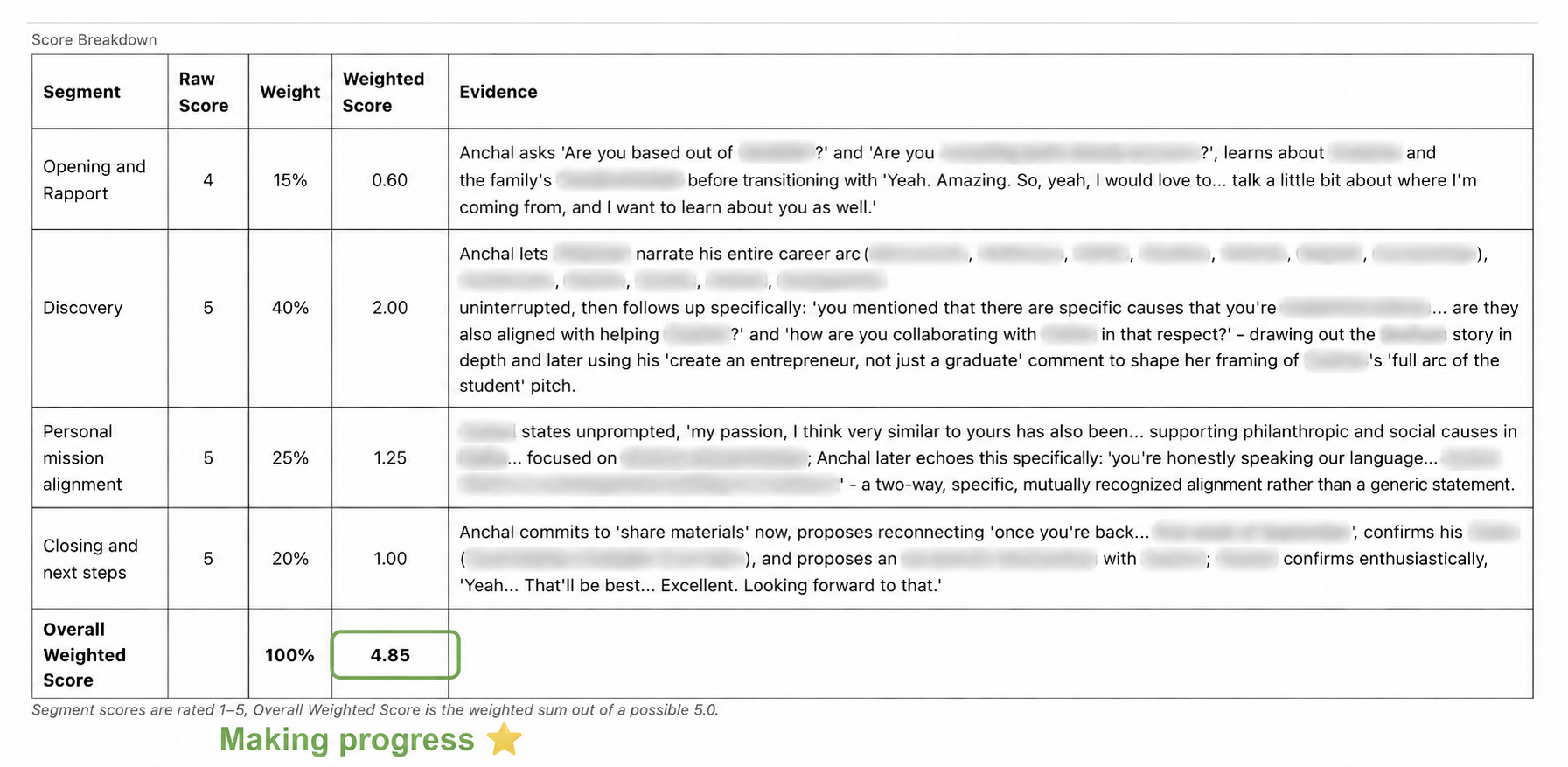
That first call — the one that started this whole thing — scored 1.70 out of 5. A few iterations and a lot of teammate feedback later, a call with a warm, well-qualified prospect scored 4.85 out of 5.
I'd love to tell you that jump was entirely because I got better at discovery calls. Some of it probably was. But a decent chunk of it is also just this: I finally had a system telling me, in plain language, exactly what to fix — instead of a vague feeling that something hadn't gone well.
What’s Next?
The system will go through more iterations to evolve with how we use this over time. Just like any story, this one will never truly end. One of the exciting and obvious things we want to explore is how the entire workflow can be automated — not just the generation of the feedback, but also the uploading of the transcript. Stay tuned for more updates, I guess!